Here is a number that should concern every Indian household: borewell and well water — which millions of homes across Bengaluru, Hyderabad, Pune, Jaipur, Delhi NCR, and semi-urban India depend on — typically has TDS levels between 400 and 1,200 ppm.
Borewell water in Rajasthan, Haryana, and Gujarat particularly tends toward the high end — many areas have naturally occurring fluoride and elevated salinity in groundwater. This is why RO purifiers are far more widely used in North and West India than in coastal Karnataka or Maharashtra, where natural TDS is lower.
In my 9 years of testing water across Indian homes, I have found that the single most common mistake families in high TDS areas make is buying a purifier designed for low TDS municipal water. It looks identical on the shelf. It costs the same. But it cannot handle your water — and within 6–8 months, either the membrane fails or you are drinking water that is not adequately purified.
This guide exists to prevent that mistake. I will tell you exactly what high TDS water does to your body, which technology actually works, and which specific Nexus purifier is right for your city’s water conditions.
💡 Already know about TDS? This blog assumes you understand TDS basics. If you want a complete primer first, read our detailed guide: What is TDS in Water? Safe TDS Levels for Drinking Water in India →
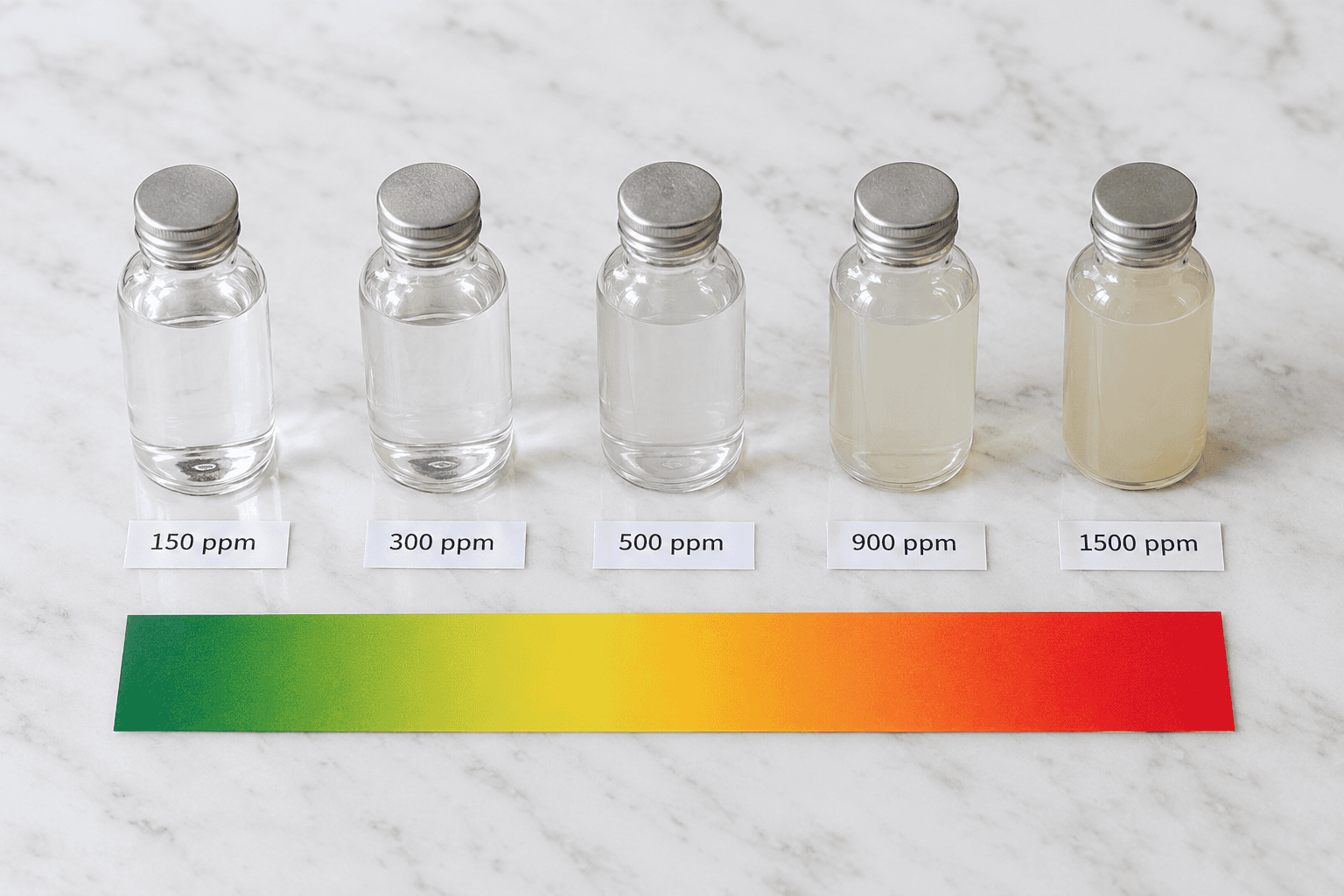
As per BIS IS 10500:2012 — India’s official drinking water standard — the acceptable TDS limit is 500 mg/L. Anything above this requires purification before drinking.
In practical terms for Indian households:
| TDS Level | Classification | What It Means | Action Needed |
|---|---|---|---|
| 0–50 mg/L | Too pure | Lacks essential minerals | Add mineral cartridge |
| 50–150 mg/L | Excellent | Ideal — no action needed | Maintain current source |
| 150–300 mg/L | Very Good | BIS and WHO recommended range | UV+UF sufficient |
| 300–500 mg/L | Acceptable | BIS upper limit | RO recommended |
| 500–900 mg/L | High TDS | Exceeds BIS limit — unsafe | RO essential |
| 900–1500 mg/L | Very High TDS | Serious health concern | High-capacity RO required |
| Above 1500 mg/L | Extreme TDS | Unfit for consumption | Heavy-duty RO + pre-filter system |
Sources: BIS IS 10500:2012 | WHO Guidelines for Drinking Water Quality
⚠️ Critical point most people miss: A TDS meter CANNOT detect arsenic, fluoride, bacteria, nitrates, or uranium — the most dangerous contaminants in Indian water. A TDS reading of 200 ppm from a borewell can still contain life-threatening levels of arsenic. High TDS is a warning signal — not the only thing to test. ZeroB
This section is the most important in this entire guide — and the most ignored when people buy purifiers.
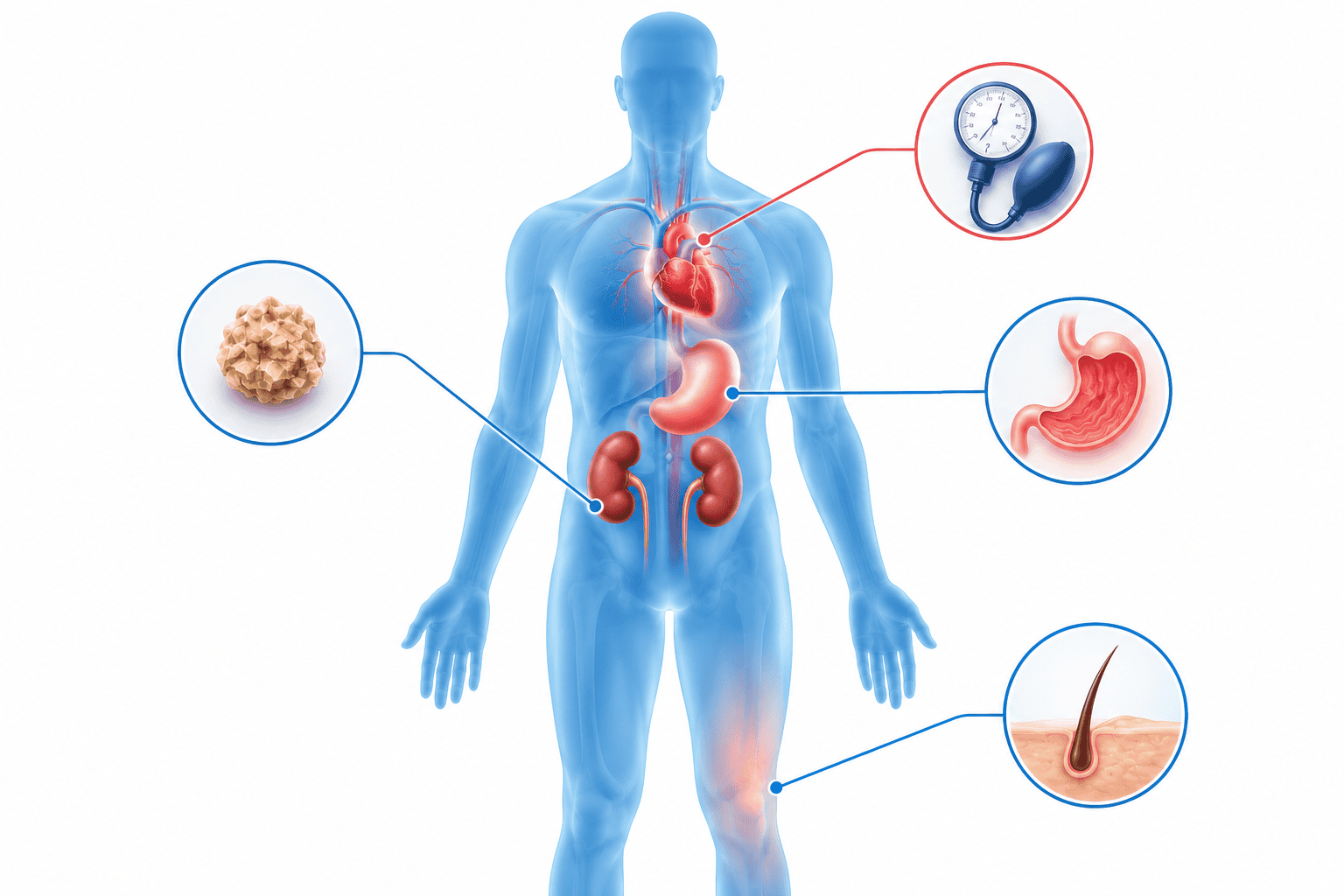
1. Kidney Stress and Stone Formation
India has one of the world’s highest kidney stone rates, and research consistently links high TDS groundwater as a contributing factor — particularly in Rajasthan, Gujarat, and Haryana where TDS frequently exceeds 1,000 ppm.
A study of 500 families in Punjab’s high TDS belt found 40% higher rates of kidney stone formation compared to families drinking 200–300 ppm TDS water. (rocareindiaExcess) dissolved calcium, magnesium, and oxalate in high TDS groundwater progressively concentrate in kidney tubules.
This does not happen overnight — it is years of silent accumulation before symptoms appear.
2. Cardiovascular RiskHigh sodium content in water contributes to elevated blood pressure. Arsenic contamination in West Bengal, Bihar, and UP groundwater is directly linked to cardiovascular disease with long-term exposure. (healthnesthq)
3. Gastrointestinal DisruptionHigh TDS can cause an osmotic imbalance in the gut, triggering loose stools, bloating, nausea, and IBS-like symptoms — especially in kids and elderly family members who are more sensitive (healthnesthq)
One of the most immediate and disruptive consequences of ingesting high TDS borewell water is gastrointestinal inflammation. (waterpurifieradvisor)
4. Heavy Metal AccumulationWhen TDS is high due to industrial contamination rather than natural mineral content, if your high TDS borewell water contains trace heavy metals like arsenic, lead, or cadmium, chronic ingestion causes direct tubular cytotoxicity and interstitial nephritis, gradually impairing kidney function. (waterpurifieradvisor)
5. Appliance and Infrastructure DamageHigh TDS water does not just affect your body. High TDS water affects your entire home — not just the glass of water you drink. Scale buildup in geysers, washing machines, and overhead tanks. Corroded pipes. Shortened appliance lifespans. Stained vessels and bathrooms. (h2s)
💡 Rajat’s field observation: In every home I visit with input TDS above 800 mg/L, I find three things without exception — white scale deposits around taps and showerheads, a geyser running inefficiently, and family members who have “adjusted to” water that tastes slightly salty or metallic. None of these are signs to ignore.
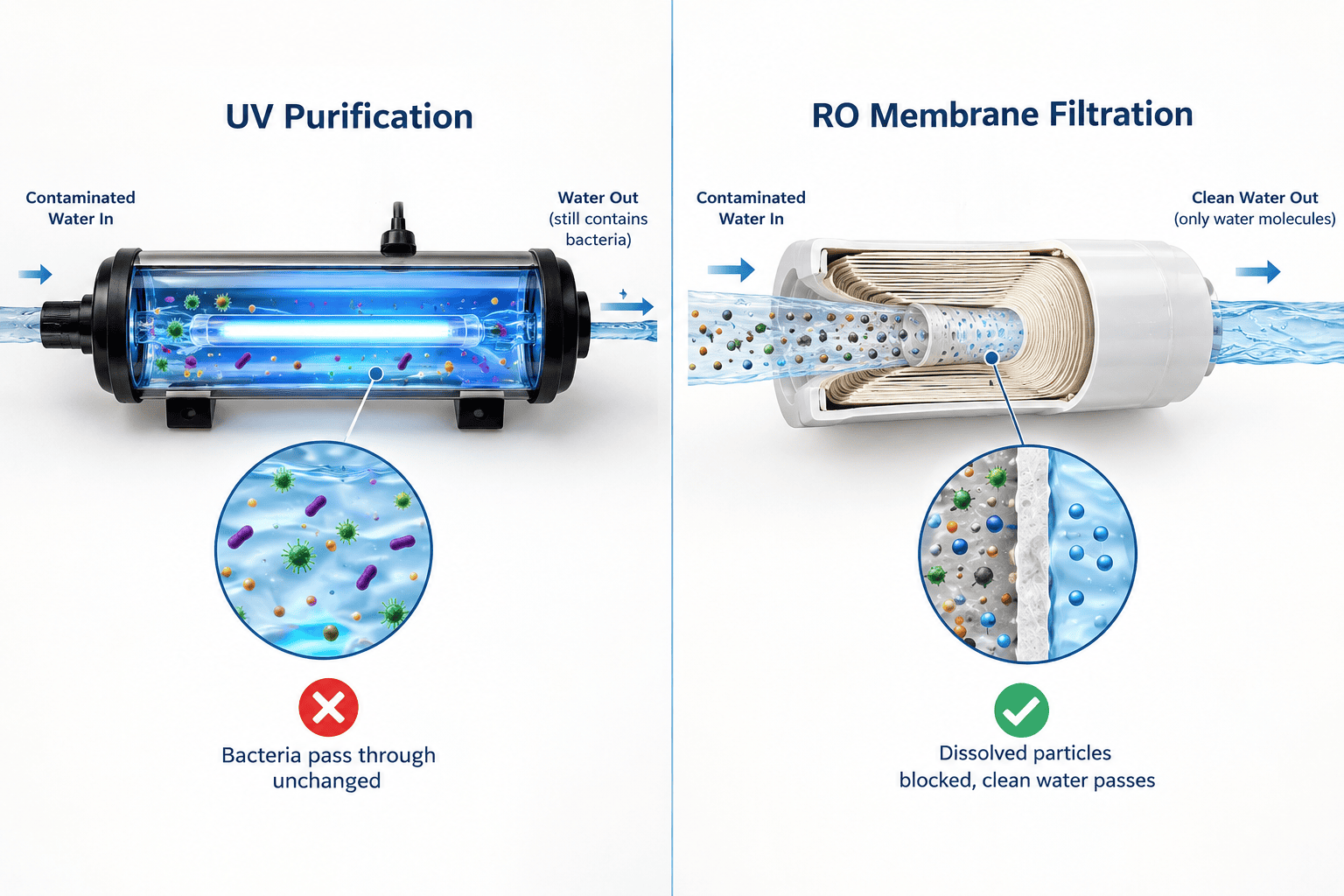
This is where most buying decisions go wrong — and why I want to be very clear.
| Purification Technology | Removes TDS? | Kills Bacteria? | Removes Heavy Metals? | Works for High TDS? |
|---|---|---|---|---|
| RO (Reverse Osmosis) | ✓ Yes — up to 97% | ✓ Yes | ✓ Yes | ✓ Yes |
| UV (Ultraviolet) | ✗ No | ✓ Yes | ✗ No | ✗ No |
| UF (Ultrafiltration) | ✗ No | Partial | ✗ No | ✗ No |
| Gravity/Carbon filter | ✗ No | ✗ No | ✗ No | ✗ No |
| Boiling | ✗ No — concentrates TDS | ✓ Yes | ✗ No | ✗ No |
If your TDS is above 300 mg/L, only RO technology reduces it. UV kills bacteria but does nothing to dissolved solids, heavy metals, fluoride, or nitrates. Boiling actually makes high TDS water worse by evaporating water and concentrating the dissolved solids that remain.
The ideal system for high TDS Indian water is RO + UV + UF combined — RO reduces TDS and removes heavy metals, UV destroys bacteria and viruses, UF catches any remaining particles and cysts.
📖 Want the full technology comparison? Read our detailed guide: RO vs UV vs UF — Which Water Purifier Technology is Right for Your City? →
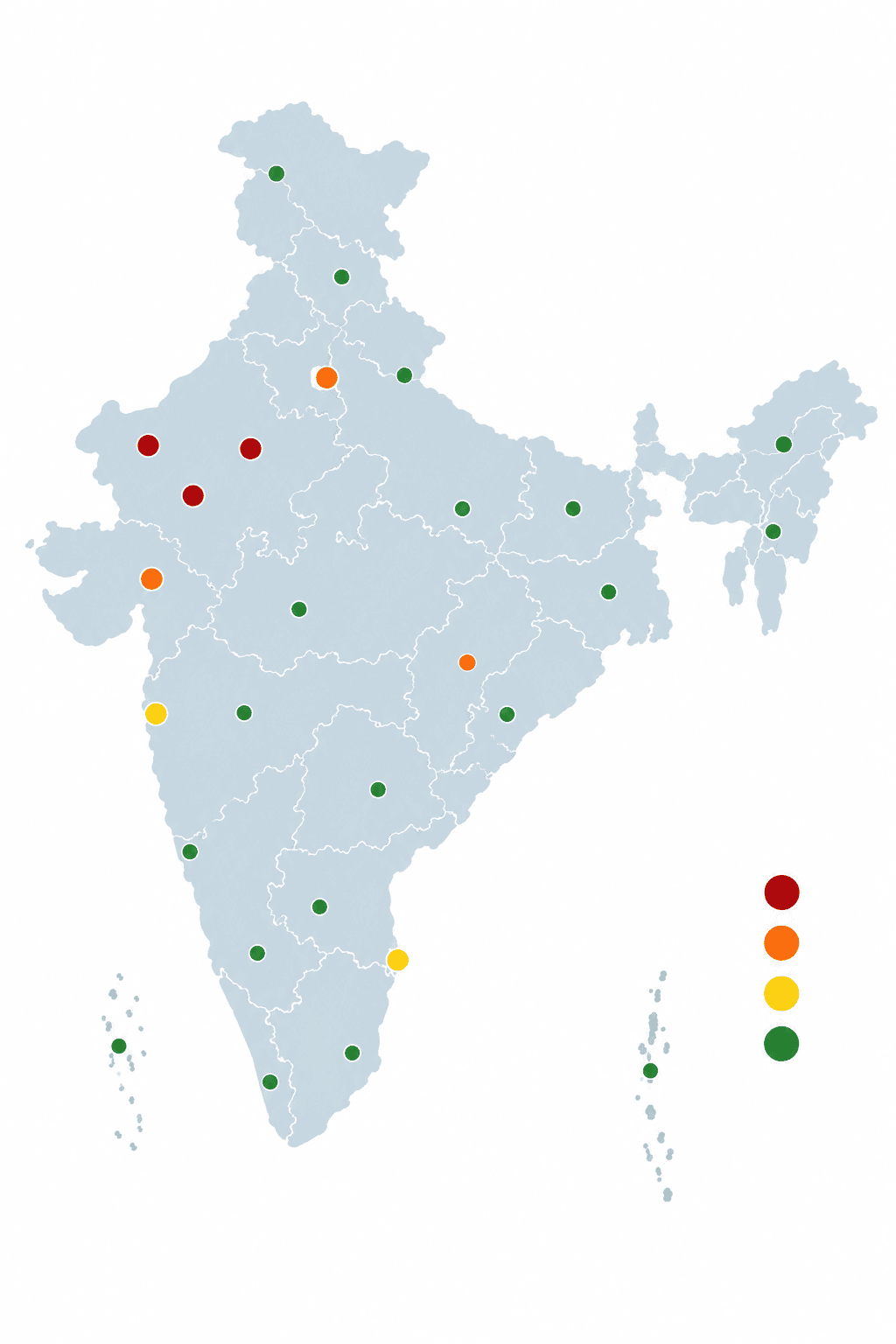
Borewell water TDS in India commonly ranges from 600 to 2,000+ ppm, especially in states like Rajasthan, Gujarat, Haryana, and in Delhi NCR’s older localities and outer areas. (h2s)
Borewell water TDS in India commonly ranges from 600 to 2,000+ ppm, especially in states like Rajasthan, Gujarat, Haryana, and in Delhi NCR’s older localities and outer areas. (h2s)
Here is a verified city-by-city guide based on CGWB groundwater quality data and field testing:
| City / Region | Municipal TDS | Borewell TDS | Risk Level | Nexus Recommendation |
|---|---|---|---|---|
| Jaipur | 400–600 mg/L | 500–1,200+ mg/L | 🔴 Extreme | High TDS RO Membrane essential |
| Ahmedabad | 400–700 mg/L | 600–1,000+ mg/L | 🔴 Extreme | High TDS RO Membrane + pre-filter |
| Surat | 300–500 mg/L | 400–800 mg/L | 🟠 High | Nexus IntelX with TDS controller |
| Delhi NCR | 300–500 mg/L | 400–800 mg/L | 🟠 High | High TDS RO Membrane recommended |
| Jodhpur / Bikaner | 500–800 mg/L | 800–2,000+ mg/L | 🔴 Extreme | Heavy-duty RO + sediment pre-filter system |
| Hyderabad | 200–400 mg/L | 400–700 mg/L | 🟠 High | Nexus IntelX RO+UV+UF |
| Lucknow / Agra / Kanpur | 250–400 mg/L | 300–700 mg/L | 🟠 High | Nexus IntelX with UV stage |
| Noida / Gurgaon / Faridabad | 300–500 mg/L | 400–700 mg/L | 🟠 High | High TDS RO Membrane |
| Chennai (OMR, Tambaram, Velachery) | 300–500 mg/L | 600–1,000+ mg/L | 🟠 High | RO essential — seawater intrusion risk |
| Bengaluru (Whitefield, Sarjapur, KR Puram) | 150–300 mg/L | 400–800 mg/L | 🟡 Moderate–High | RO for borewell-dependent areas |
| Mumbai | 150–250 mg/L | 200–400 mg/L | 🟡 Moderate | Standard RO Membrane sufficient |
| Pune (Hadapsar, Pimpri-Chinchwad) | 200–400 mg/L | 300–600 mg/L | 🟡 Moderate–High | RO recommended for borewell areas. Read more |
💡 Test before you buy: TDS levels vary significantly by locality, building age, and season. Before purchasing any purifier, test your specific tap or borewell water with a TDS meter (available on Amazon for under ₹300). This 30-second test will confirm exactly which Nexus model is right for you. Contact us on WhatsApp with your TDS reading and we will recommend the right solution.
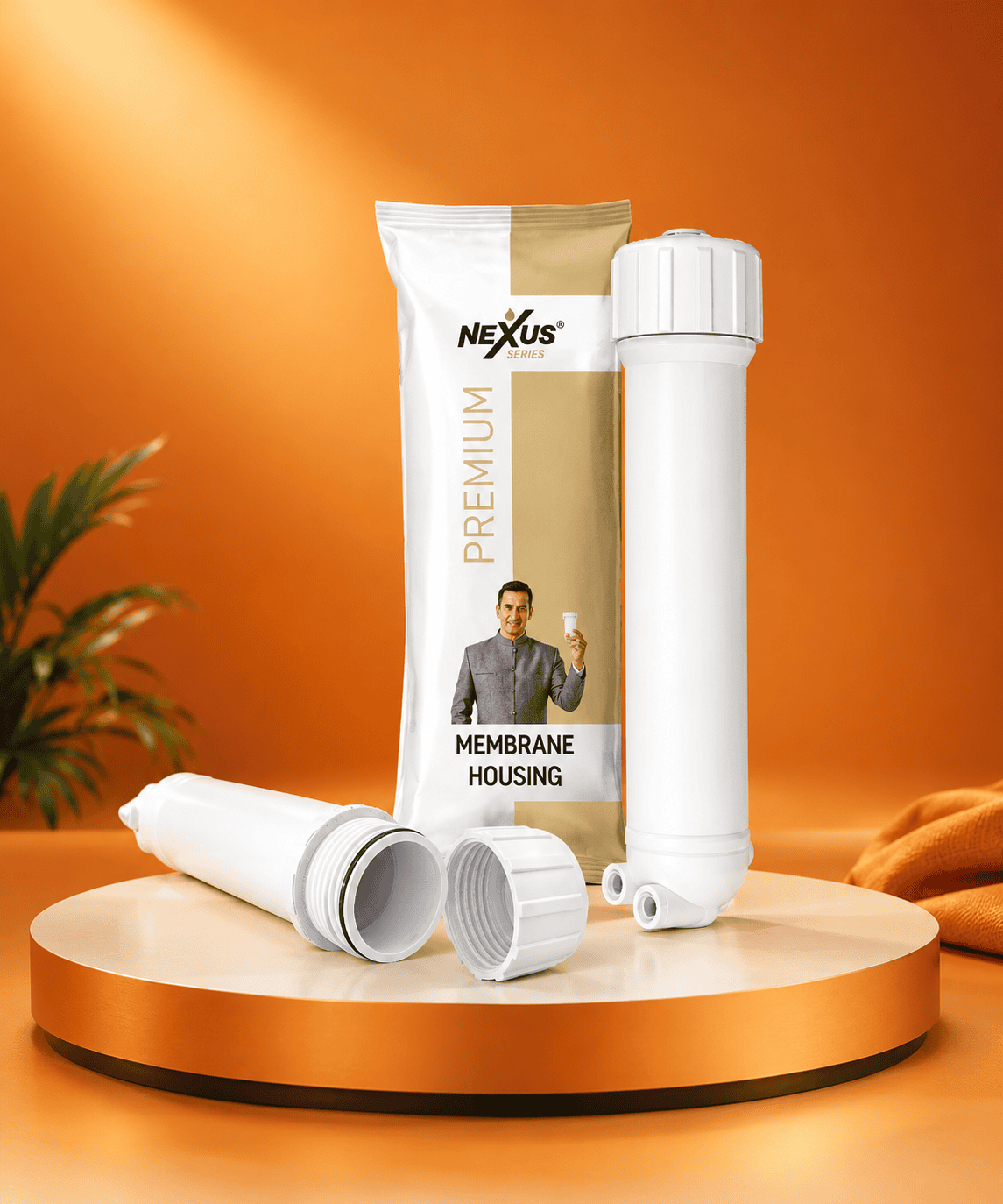
Not all RO purifiers are built for high TDS Indian water. Here is exactly what to check:
1. Maximum Input TDS RatingEvery RO purifier has a maximum input TDS it can handle. Standard purifiers handle up to 500–1,000 mg/L. For high TDS areas above 600 mg/L — Jaipur, Ahmedabad, Jodhpur — you specifically need a purifier rated for 1,500–2,000+ mg/L input TDS. The Nexus High TDS RO Membrane is specifically designed and tested for this range.
2. TDS Controller — Mineral RetentionHigh TDS RO purification removes almost everything — including beneficial minerals like calcium and magnesium. A TDS controller blends a small proportion of pre-RO water back into the purified output, restoring optimal mineral balance at 150–250 mg/L. This is not optional for high TDS areas — without it, output water can drop below 50 mg/L (too pure, lacks minerals).
Every Nexus IntelX purifier includes a built-in TDS controller calibrated for Indian water conditions.
3. Pre-Sediment Filtration Quality High TDS borewell water in cities like Jaipur and Ahmedabad carries significant sediment — rust, sand, silt, clay — that clogs and destroys RO membranes within months if not properly pre-filtered. The Nexus PP Spun Sediment Filter is your membrane’s first and most critical protector — in extreme TDS areas, replace it every 2–3 months rather than the standard 3–4 months.
4. UV Stage for Microbiological SafetyHigh TDS borewell water often comes from sources with both dissolved solid contamination AND microbial contamination simultaneously. RO alone removes bacteria physically — but a UV stage adds a second layer of pathogen destruction at 254 nm wavelength, meeting WHO Guidelines for Drinking Water Quality on microbiological safety. Never buy an RO-only purifier for borewell water.
5. ISI 16240:2023 CertificationThis is non-negotiable for high TDS households. IS 10500:2012 is the foundational reference document for all drinking water quality assessment in India — and ISI 16240:2023 certification means the purifier has been independently tested to produce output water meeting those standards. All Nexus purifiers carry this certification — not all brands do. (Auriga Research)
📖 Want to understand what ISI certification actually means and why it matters? Read our guide: BIS Standards for Drinking Water in India Explained →
For TDS 300–800 mg/L — Standard High TDS (Most Indian Cities)
Nexus IntelX Wall Mounted RO Purifier — ₹24,100The IntelX is specifically engineered for Indian water conditions with multi-stage RO+UV+UF purification, built-in TDS controller, and a standard Nexus RO Membrane at ₹1,950 that handles input TDS up to 1,000 mg/L.
Available in White and Brown to match your kitchen.
Best for: Delhi NCR, Surat, Hyderabad, Bengaluru borewell areas, Lucknow, Agra, Noida, Gurgaon
For High TDS + Premium Kitchen Aesthetics
Nexus Under Sink RO Purifier — ₹23,900If you live in a high TDS city and have a modern modular kitchen, the Nexus Under Sink RO Purifier delivers the same ISI-certified purification — completely hidden below your kitchen counter with a 12L pressure tank and smart LED filter indicator. For TDS above 800 mg/L, pair with the High TDS RO Membrane.
Best for: Modular kitchens in Delhi NCR, Hyderabad, Surat, Ahmedabad — where aesthetics and high TDS purification both matter
For Health-Focused Buyers in High TDS Areas
Nexus Alkaline Model + High TDS Membrane
High TDS water is often also acidic or has a pH outside the BIS IS 10500:2012 acceptable range of 6.5–8.5. The Nexus AAA Alkaline Filter raises purified water pH to a healthy 7.5–8.5 — ideal for families in hard water areas where natural pH is disrupted.
Nexus Copper Model
The AAA+ Alkaline Cartridge and Grand Forest Mineral Filter restore beneficial minerals post-RO purification — addressing the concern about over-purified water losing essential calcium and magnesium.
For Commercial and High-Volume Use
Nexus Commercial Industrial RO Plants — 50 LPH to 1000 LPHOffices, restaurants, schools, and factories in high TDS cities require far higher purification capacity than household purifiers can provide. The Nexus Commercial RO Plant range handles industrial-scale TDS challenges across all Indian water conditions.
| Stage | Component | What It Does for High TDS Water |
|---|---|---|
| Stage 1 | PP Spun Sediment Filter | Removes rust, sand, clay from borewell water — protects the membrane. |
| Stage 2 | CTO Carbon Pre-Filter | Absorbs chlorine and organics that degrade the RO membrane. |
| Stage 3 | High TDS RO Membrane | Removes 90–97% TDS, heavy metals, fluoride, nitrates, arsenic. |
| Stage 4 | TDS Controller | Restores essential minerals — targets 150–250 mg/L output. |
| Stage 5 | UV Chamber | Inactivates bacteria, viruses, E. coli at 254 nm. |
| Stage 6 | UF Membrane | Catches Cryptosporidium, Giardia, remaining particles. |
| Stage 7 | Inline Post-Carbon Filter | Final taste polish — removes any residual odour. |
| OPTIONAL | AAA Alkaline Filter | Raises pH to 7.5–8.5 for alkaline-enriched output. |
| OPTIONAL | Grand Forest Mineral Filter | Restores calcium, magnesium, and trace minerals post-RO. |
If you live in a high TDS city, standard maintenance schedules do not apply. High TDS water works harder on every filter in your system:
| Component | Standard Schedule | High TDS Cities (above 500 mg/L) | Order Genuine Part |
|---|---|---|---|
| PP Spun Sediment Filter | Every 3–4 months | Every 2–3 months | ₹250 |
| Carbon Pre-Filter | Every 6–12 months | Every 6 months | ₹499 |
| RO Membrane | Every 12–18 months | Every 10–12 months | ₹1,950 |
| High TDS Membrane | Every 12–18 months | Every 10–12 months | ₹1,599 |
| Post-Carbon Filter | Every 6–12 months | Every 6 months | ₹399 |
| Alkaline Cartridge | Every 6–12 months | Every 6 months | ₹1,250 |
Note: Replacement intervals are indicative. Actual filter life depends on water quality, daily usage, and manufacturer recommendations. Check the condition of your filters regularly.
💡 The easiest maintenance solution for high TDS homes: Order the Nexus 5-in-1 Replacement Filter Kit at ₹5,599 — replaces all five filtration stages in one pack.
In high TDS areas, use this kit every 6 months rather than 12.
📖 For complete maintenance guidance: Read our full guide: RO Water Purifier Maintenance — How Often Should You Service It? →
n high TDS areas, purifier performance verification is not optional — it is essential. Here is my recommended monthly check:
Step 1 — Test input TDS
Test your tap or borewell water before it enters the purifier. Note the reading.
Step 2 — Test output TDS
Test the purified water from your purifier tap. Note the reading.
Step 3 — Calculate rejection rate
Rejection Rate = ((Input TDS - Output TDS) / Input TDS) × 100
What the result means:
90–97% rejection → Membrane performing excellently85–90% rejection → Monitor closely — service approachingBelow 85% rejection → Replace RO Membrane or High TDS Membrane immediately
Example for Jaipur home (TDS 900 mg/L):
Input TDS: 900 mg/L
Output TDS: 220 mg/L
Rejection rate: 75.5% → Replace membrane immediately
In high TDS cities, check this monthly without fail.
A membrane working at 70–75% rejection in 900 mg/L input water is letting significant dissolved solids, fluoride, and potentially heavy metals through into your drinking water.
For TDS between 500–1,000 mg/L, the Nexus IntelX with a standard Nexus RO Membrane is the right choice. For TDS above 1,000 mg/L — common in Jaipur, Ahmedabad, and most of Rajasthan and Gujarat — the Nexus High TDS RO Membrane is specifically designed to handle these extreme conditions while producing output TDS in the ideal 150–250 mg/L range.
No. UV purifiers kill bacteria and viruses effectively but do not reduce TDS, remove heavy metals, or address fluoride, nitrates, or arsenic. RO purifiers reduce TDS and remove dissolved salts — essential for borewell, tanker, or hard water. UV purifiers do not reduce TDS and only suit already-good municipal water. For borewell water in high TDS areas, only an RO-based purifier works.
No — boiling actually makes high TDS water more concentrated. When water boils, H₂O evaporates but the dissolved solids remain. The same amount of TDS is now in less water — raising the concentration. Boiling kills bacteria but has zero effect on TDS, heavy metals, fluoride, or nitrates. Never use boiling as a TDS treatment strategy.
Buy a digital TDS meter for under ₹300 on Amazon. Dip it in your water for 3 seconds and read the display. For a complete picture including heavy metals, fluoride, and bacteria — which a TDS meter cannot detect — get a full lab test from a NABL-certified water testing laboratory in your city. Contact us on WhatsApp: +91-85954-57917 with your TDS reading and we will recommend the right Nexus solution.
As per BIS IS 10500:2012 and WHO guidelines, the ideal drinking water TDS range is 150–250 mg/L. This range provides the right mineral balance — not so high as to cause health concerns, not so low as to lack essential calcium and magnesium. All Nexus purifiers with TDS controllers are calibrated to target this range from high TDS Indian input water.
Significantly more frequently than standard schedules. In extreme TDS areas: PP Spun Sediment Filter every 2–3 months, carbon pre-filter every 6 months, and the High TDS RO Membrane every 10–12 months rather than 12–18. Use the Nexus 5-in-1 Kit every 6 months for full-stage replacement convenience.
High TDS hard water — specifically excess calcium and magnesium — is a known contributor to hair dryness, scalp issues, and skin dryness with regular bathing. While a drinking water RO purifier does not treat your shower water, many families in Jaipur, Ahmedabad, and Bengaluru who switch to low TDS purified water for drinking and cooking report noticeably better health outcomes over 6–12 months. For shower water treatment, a separate water softener or whole-house filtration system is needed.
No. Standard RO membranes are not designed for extreme TDS input above 1,000–1,200 mg/L — they degrade faster, rejection rates drop significantly, and output quality suffers. For TDS above 1,000 mg/L, specifically use the Nexus High TDS RO Membrane which is rated and tested for these extreme conditions. Contact our team on WhatsApp before purchasing if your TDS is above 1,500 mg/L — we may recommend an additional pre-filter housing stage.
Yes — the TDS controller in all Nexus purifiers is a bypass valve that blends a carefully calculated proportion of pre-RO water back into the purified output. This restores essential calcium and magnesium to your purified water, targeting an output TDS of 150–250 mg/L — the optimal range for both health and taste. This is a key reason why Nexus purifier water tastes noticeably better than over-purified water from systems without a TDS controller.
Most Indian cities have groundwater TDS levels between 400–1,500 ppm. If you are on borewell water or in a high TDS city, you are almost certainly drinking water that exceeds BIS IS 10500:2012 acceptable limits every single day. rocareindiaThe solution is not complicated. It is one properly specified RO+UV+UF purifier with the right membrane for your city’s TDS — maintained with genuine parts on a slightly accelerated schedule.Test your water TDS today. Match it to the city-wise guide above. Choose the right Nexus model. And check your rejection rate monthly.That is the entire strategy — and it works.
Get the Right Purifier for Your TDS — Talk to Our TeamTell us your city, your input TDS reading, and whether you use borewell or municipal supply — and we will tell you exactly which Nexus purifier and which membrane is right for your water.Nexus IntelX Wall Mounted — ₹24,100 →
RO+UV+UF | TDS controller | ISI 16240:2023 | For TDS up to 1,000 mg/LNexus Under Sink RO — ₹23,900 →
12L pressure tank | Smart LED | Hidden install | For TDS up to 1,000 mg/LNexus High TDS RO Membrane — ₹1,599 →
Specifically for TDS above 800 mg/L | Jaipur, Ahmedabad, Jodhpur, Rajasthan, GujaratNexus 5-in-1 Replacement Filter Kit — ₹5,599 →
All five stages in one pack | Use every 6 months in high TDS areasExplore All Nexus Water Purifiers → Call: +91-81306-86555
WhatsApp: +91-85954-57917
About the Author
Rajat Bansal is a water quality specialist and product consultant at Nexus Water Purifier with over 9 years of experience in RO purification systems and water quality assessment across India. He has personally tested water samples in more than 40 Indian cities and advises residential and commercial clients on the right purification solution for their specific water conditions.
Nexus Water Purifier — ISI 16240:2023 Certified | GEM Approved | Serving Asia.